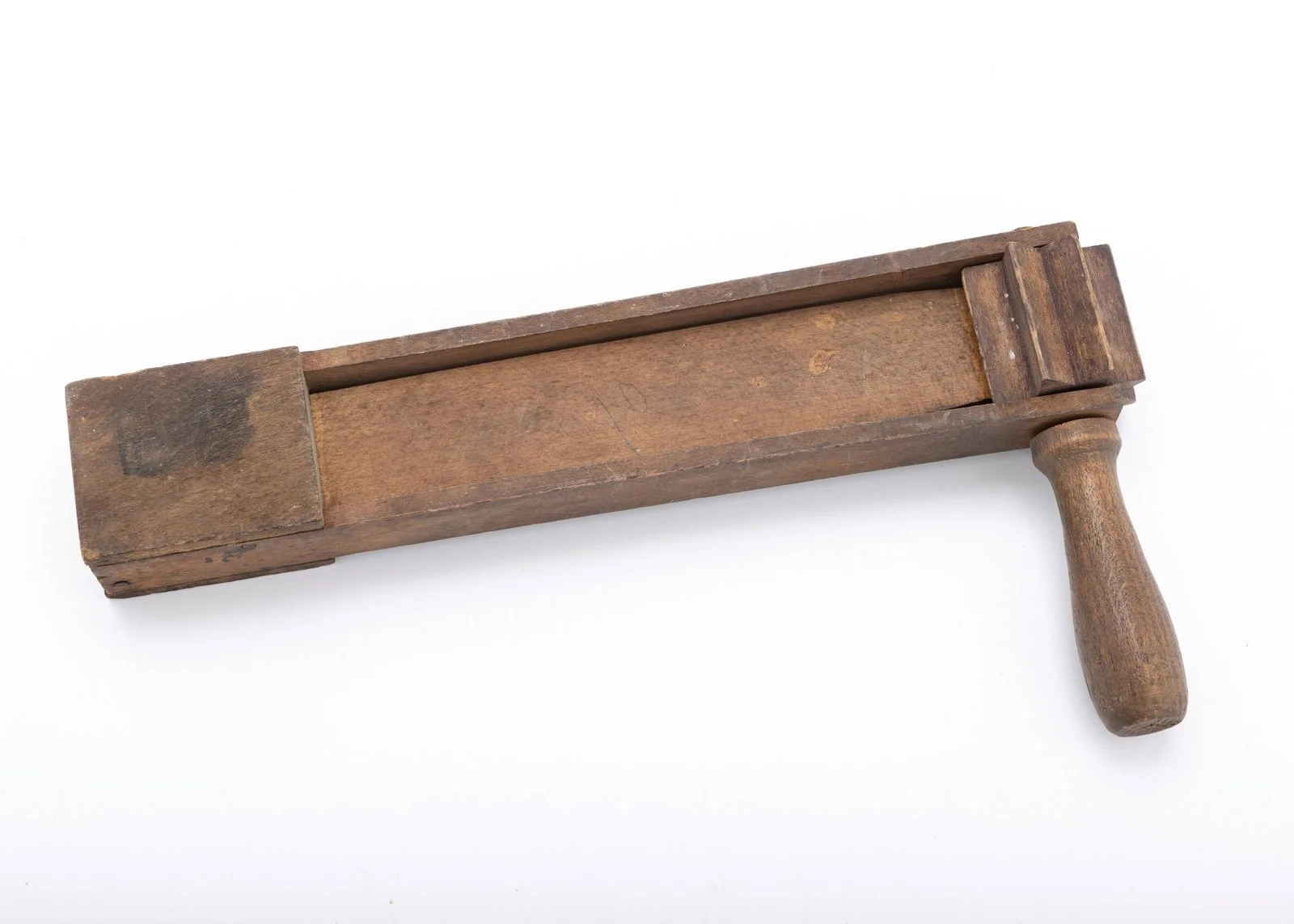
The grogger; a look into wooden judaica and its history
Pictured: 19th c. wooden grogger from New York
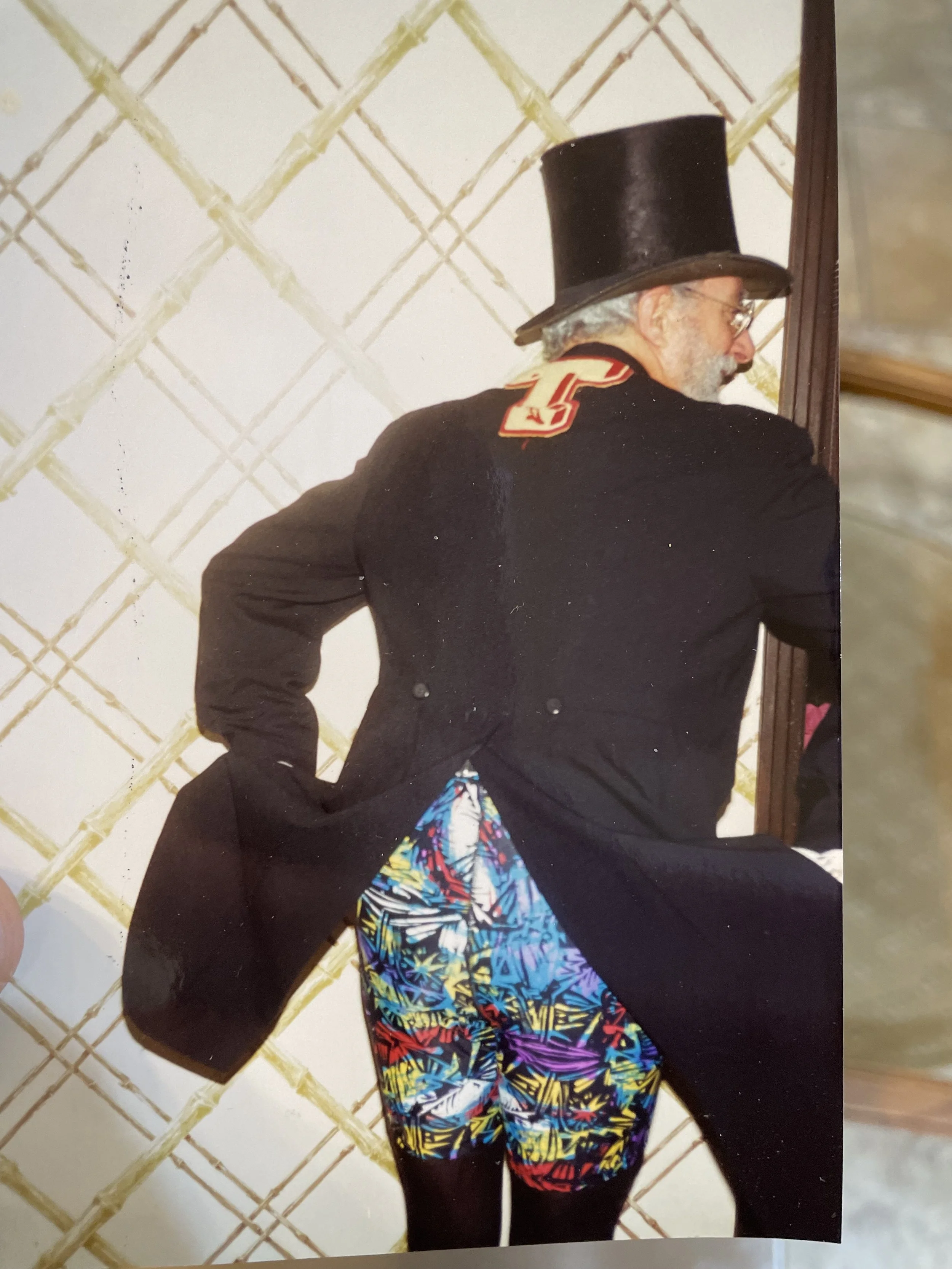
My father in his Purim costume, c. 2000
What is Purim?
Purim is a Jewish holiday celebrated in late winter or early spring, depending on the Hebrew calendar which follows the moon cycles. It’s the time of the year we read the Book of Esther and how she seduced the King of Persia to help save the Jewish people from persecution. The King in the story is thought by some to be Xerxes I, but it’s hard to know for sure if the story is even true. We read this tale often from an ornate scroll (the scroll of Esther) since it’s not actually in the Torah and as we read the tale, we boo and jeer any time the name of Haman comes up. Haman is the Steven Miller or the Joseph Goebels of the story, an advisor who’s hateful rhetoric convinces the king to expel or kill all Jews. During this reading and subsequent celebratory fair afterwards, both children and adults dress up as different characters from the story and after listening to the reading, celebrate with games and prizes as well as an after party for adults, who are commanded by Jewish law to drink quite heavily. It’s a time of revelry and mischief.
While listening to the story being told, many in the audience use groggers or noise makers to cause a stir when the name of Haman is mentioned.
My father loved Purim. He dressed up every year in a ridiculous costume (seen at left) and owned a massive wooden grogger, the loudest of anyone’s in the congregation every year. As the story is told very quickly in Hebrew, there are times that one might miss a mentioning of Haman’s name. So as a leader in the community, my father was the way we all knew it was time to shout, boo, and shake whatever noisemaker we had brought. When he started, we all joined in.
“For Purim, a brochure
Full of satire
On Hitler’s carcass
And all his great strength.”
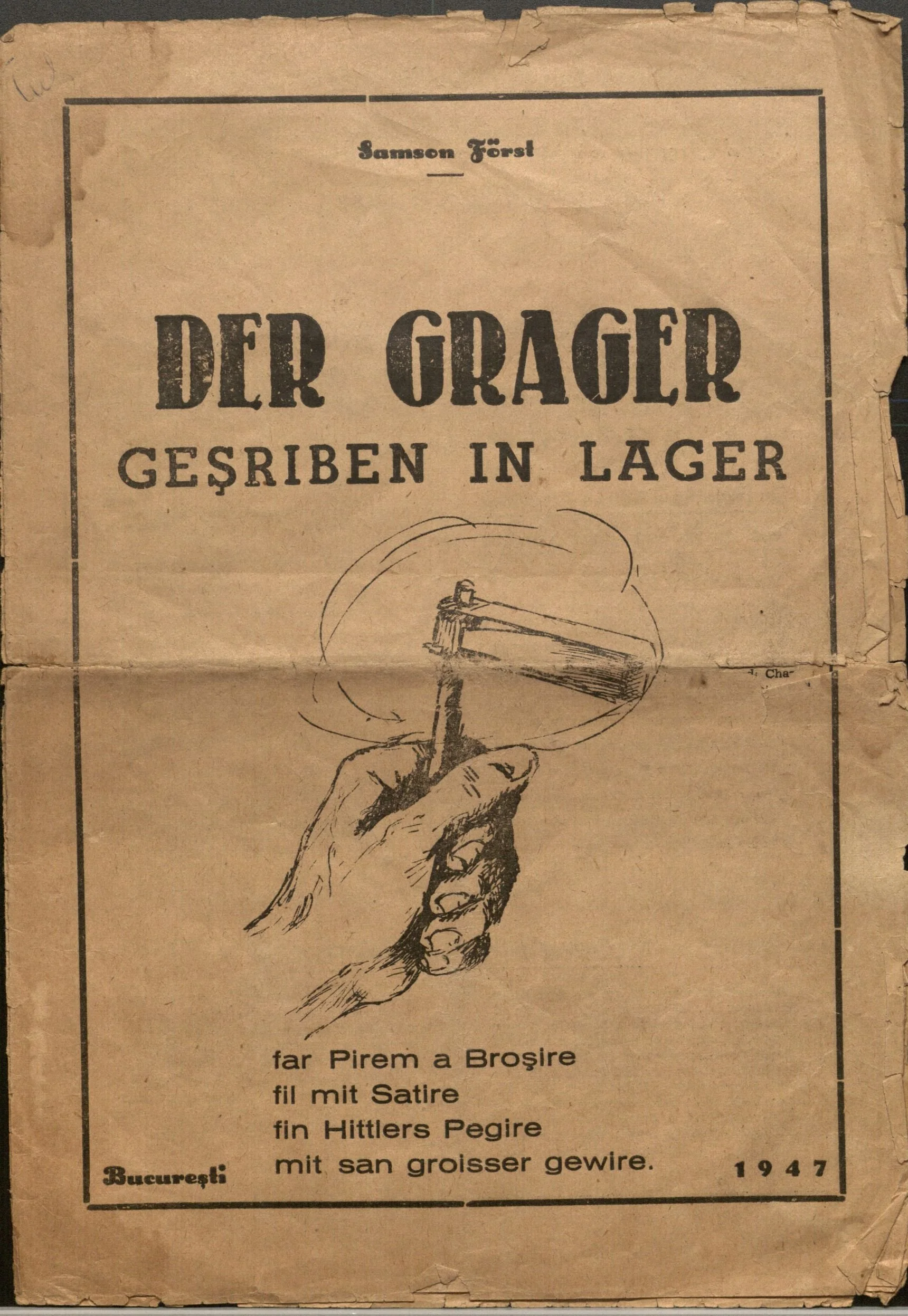
A pamphlet from Bucharest, Romania from 1947 by Samson Forst from the US Holocaust Memorial Museum Collection. (2010.343-10.521)
why all the ruckus?
Jews didn’t always use a wooden grogger as illustrated in the pamphlet above. They didn’t even make noise at the mention of Haman until the 13th century. The tradition stems from a passage in the Torah that says to “erase” the name from memory, so children would take small stones, write “Haman” on them, then rub the stones together to quite literally erase the name.
This gained popularity across Eastern Europe and slowly evolved to banging stones together, banging on tables, or even breaking clay pots. In the 17th century, gunpowder became available and people would use makeshift firecrackers to blot out the name of Haman. By the early 19th century, Jews began shifting to wooden handheld noisemakers of various models until settling on the form we know today.
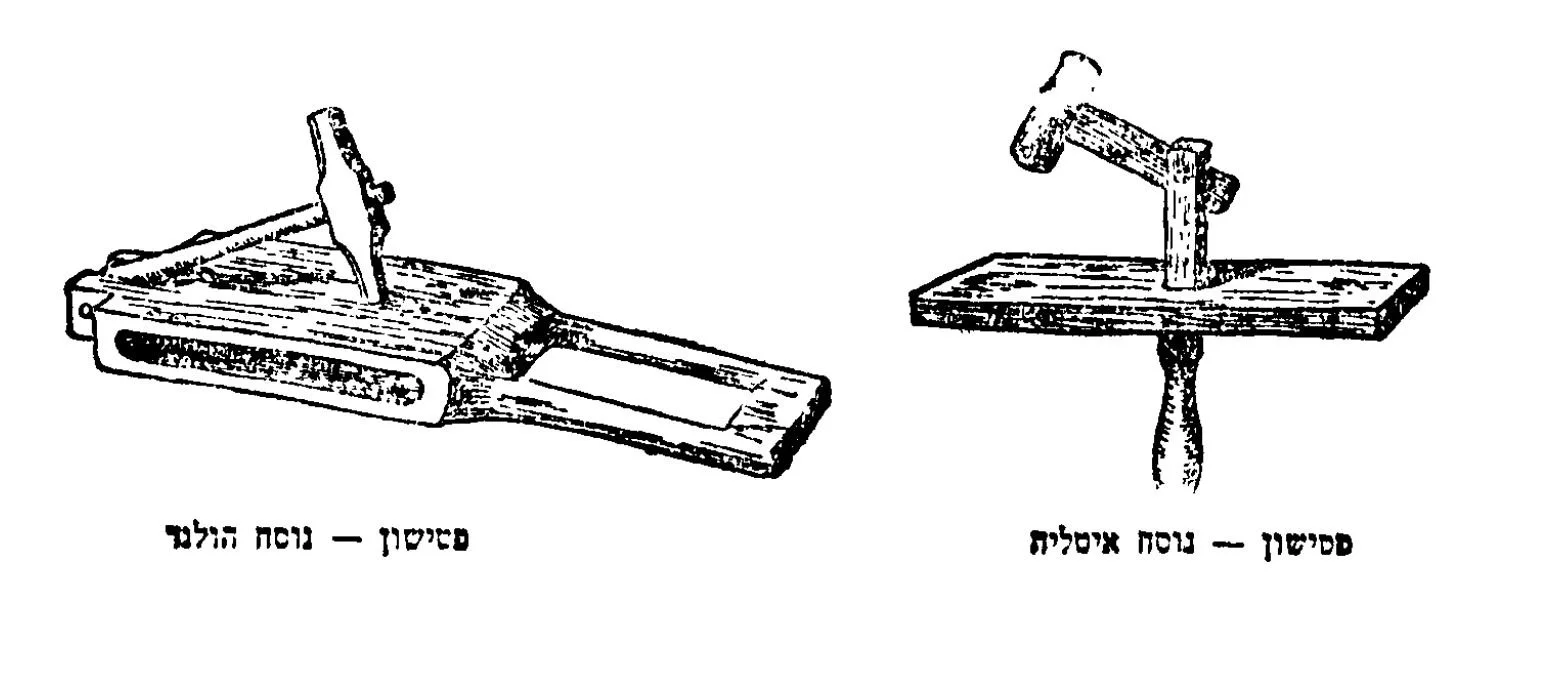
Two early examples of groggers, Holland (left) and Italy (right), from The Book of Festivals – Purim, Lag Ba’Omer, Tu Be’Av, Yom-Tov Lewinski, Agudat Oneg Shabbat, (1950)
but groggers haven’t always been jewish
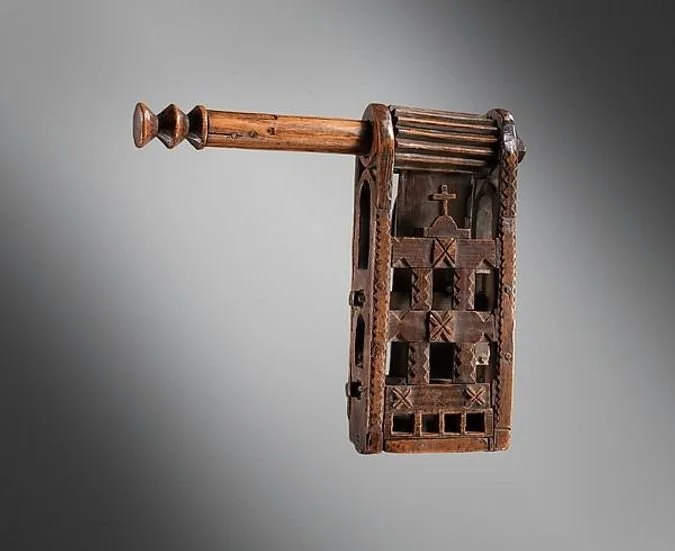
A French cog rattle from the 15th or 16th century. Image by Metropolitan Museum of Art
Some say this design dates all the way back to ancient Greece, but it is well documented that similarly designed noisemakers were used as far back as the 9th century by the Catholic church during the days preceeding Easter, when bells are not to be rung. A workaround for not using bells was to use large wooden crank-driven “clackers” or crotalus, which takes it’s name from the Greek word for “rattle”. For smaller bells that would have been rung indoors, the familiar cog rattle (pictured above) was used.
In the 17th century in early America, there were groups that patrolled the streets similarly to modern day police, called the Rattle Watch. They were called this because they would use a similarly shaped device to sound the alarm when a crime was committed and they needed backup.
Once the industrial revolution came around, metal whistles were able to be made in mass quantity and replaced the rattle in the 1880s. But for World War I, the same design was useful in announcing incoming warfare while wearing gas masks, which hindered the use of whistles.
By this point, groggers (the yiddish word for “rattle”) were commonly used by children as toys across Europe and America. Leopold Mozart’s 18th century Toy Symphony even includes it as an “instrument” along with other various toys in the song. Now, centuries later, groggers are still the noisemaker of choice for children and adults alike on Purim.
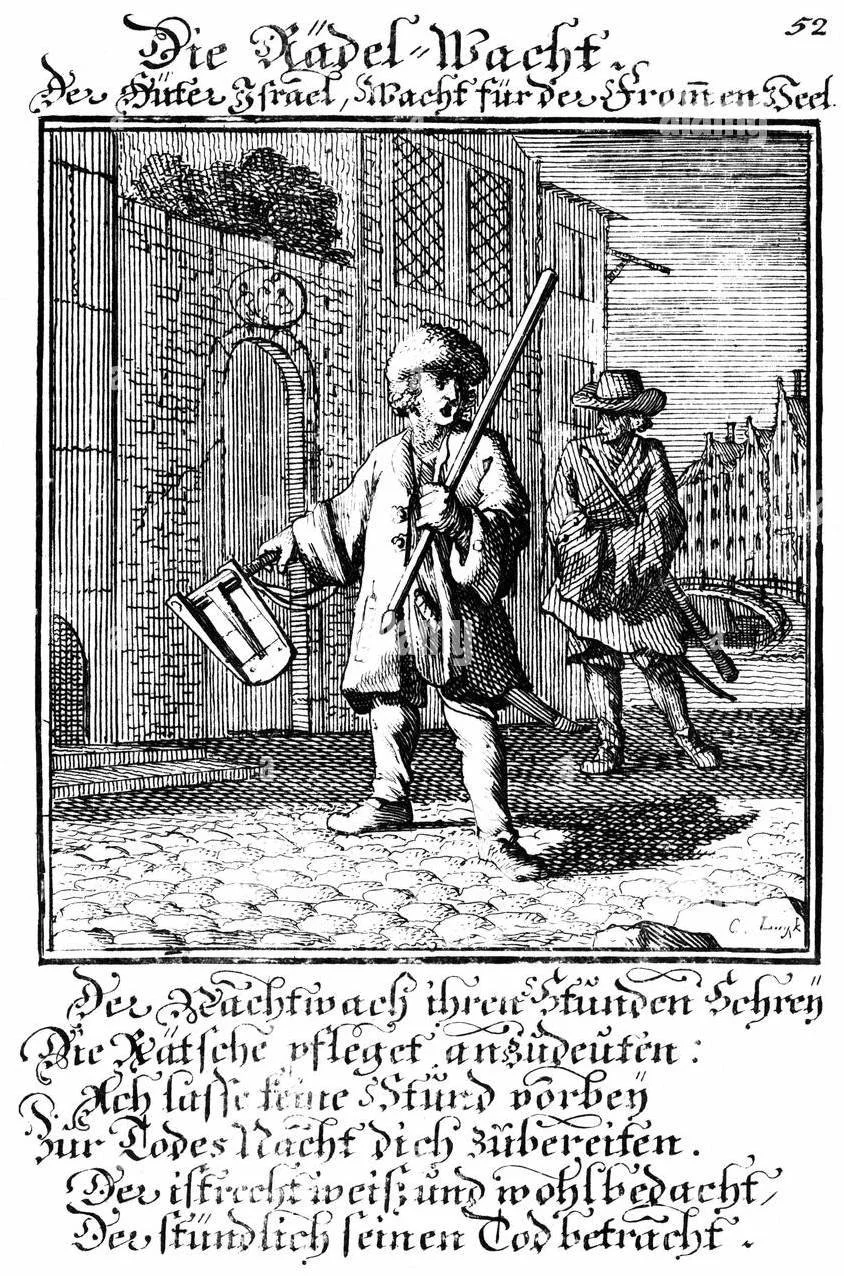
A copper engraving from Staendebuch by Christoph Weigel, 1698, with words by Abraham a Santa Clara
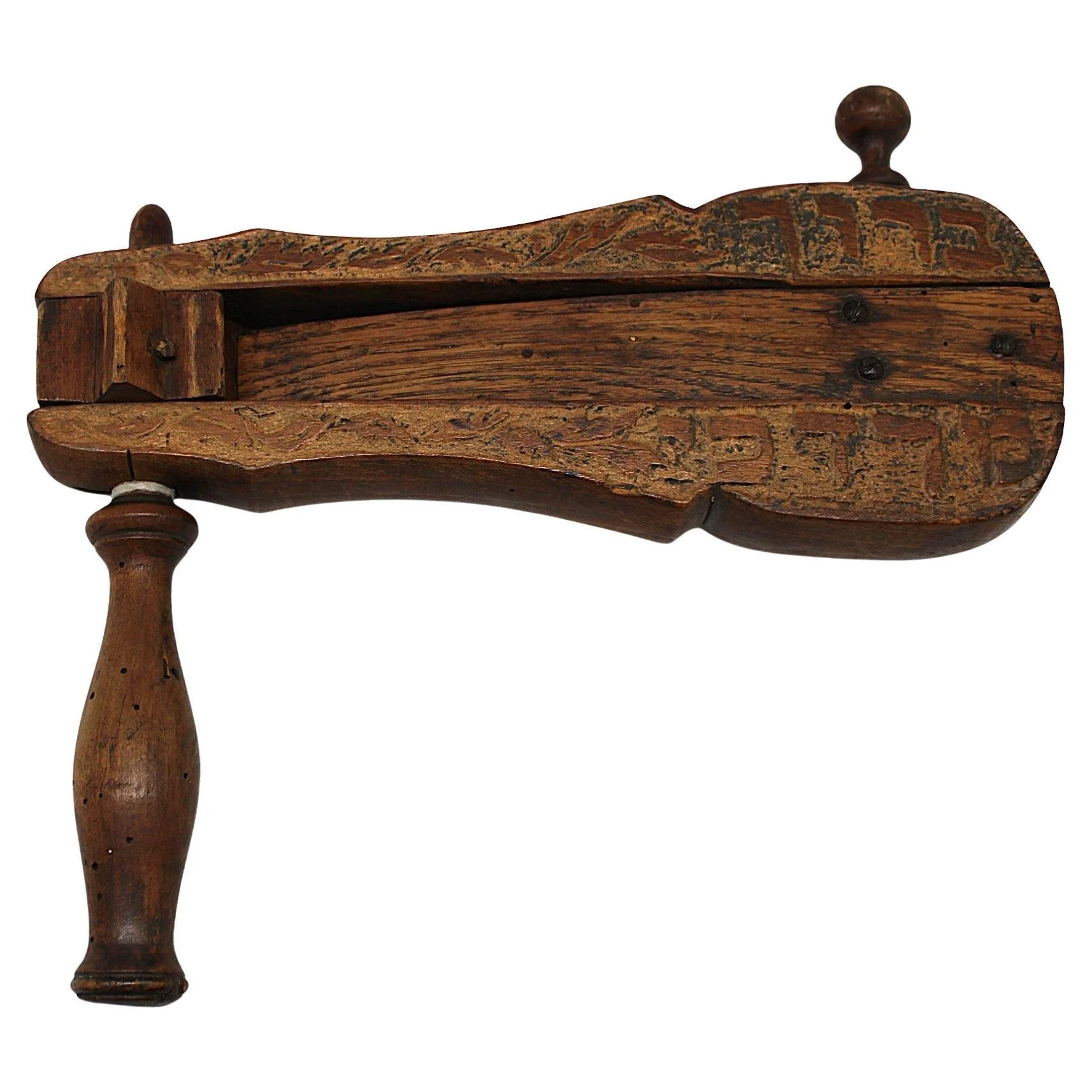
European wood grogger c. early 20th century
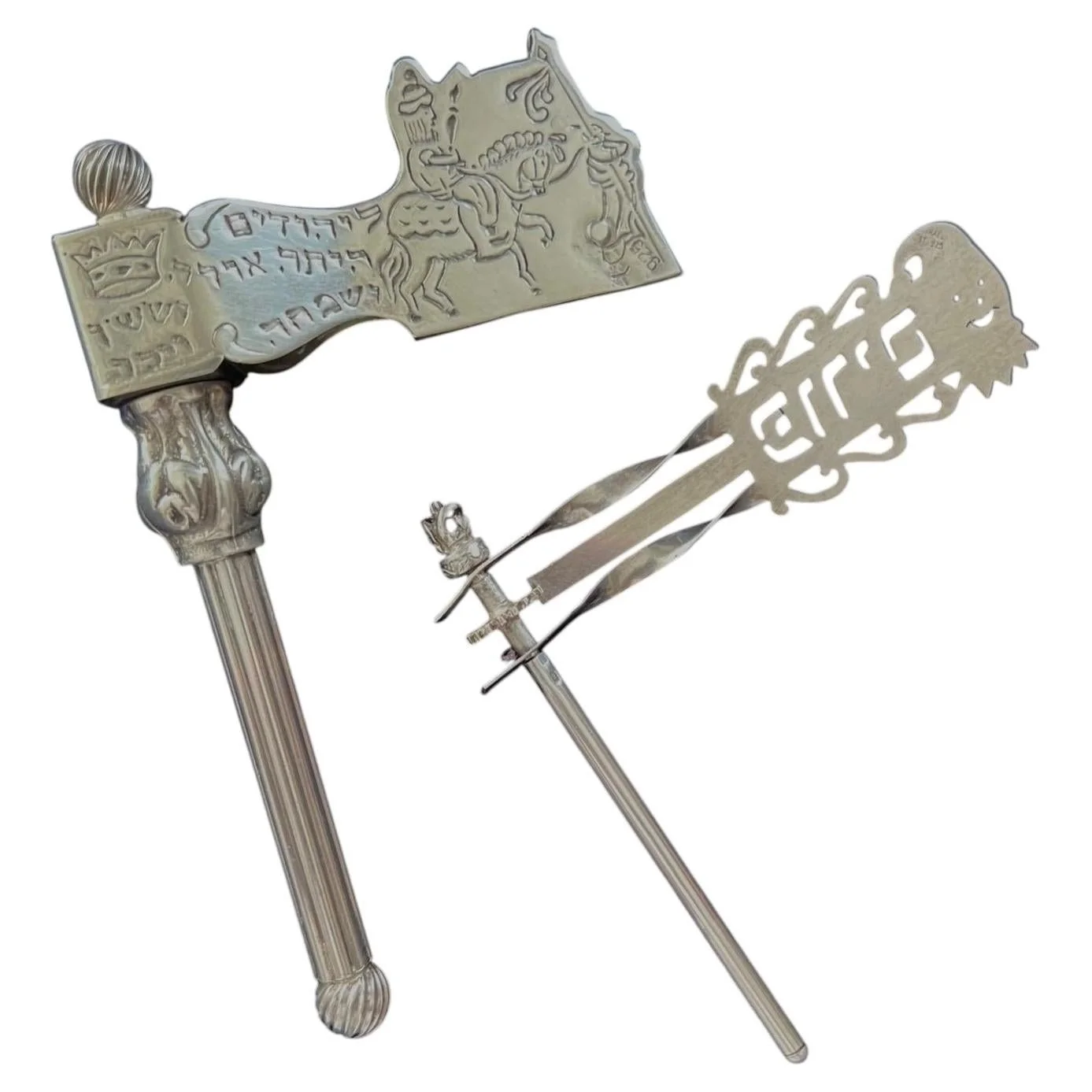
Austro-Hungarian silver groggers c. 1880
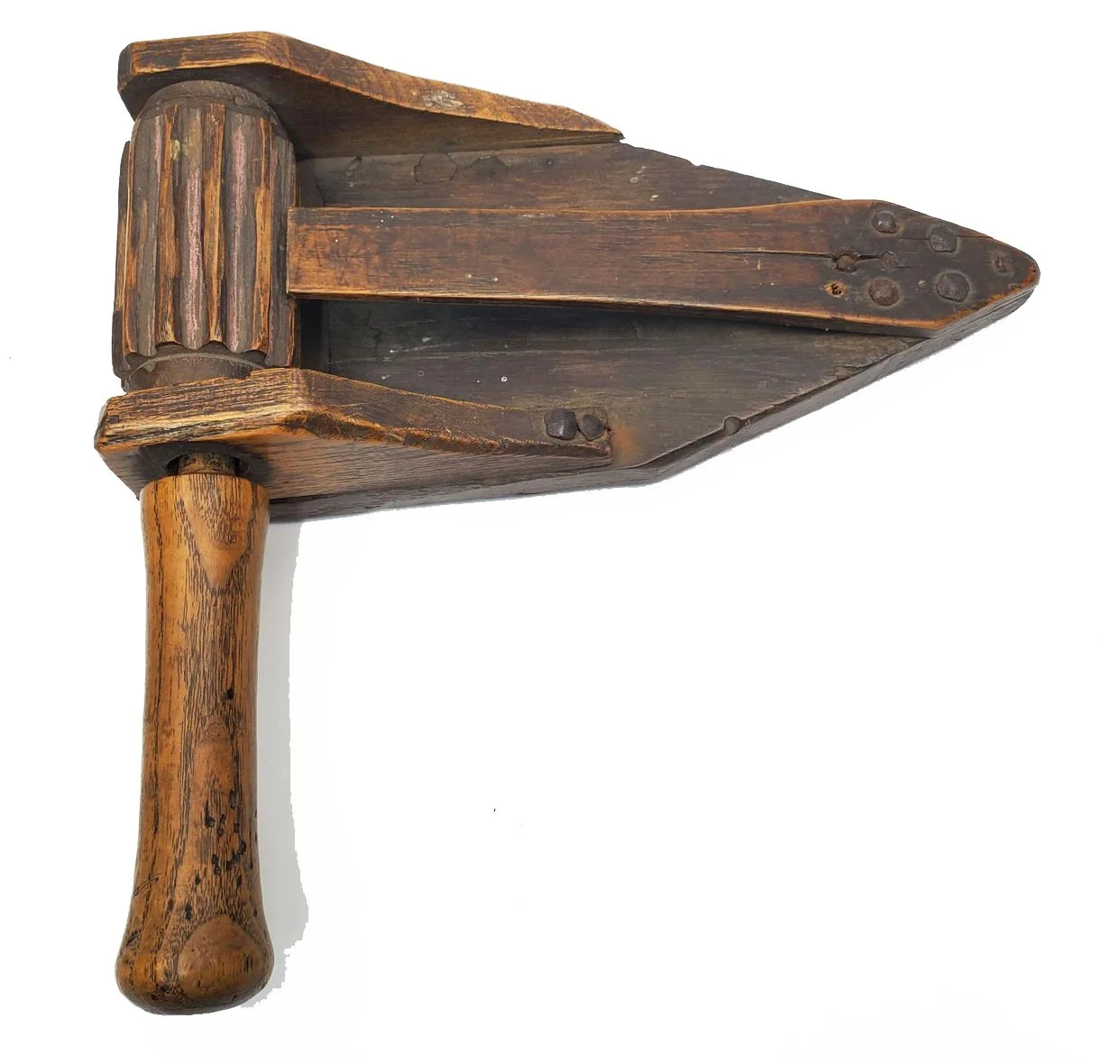
Brooklyn, NY wood grogger c. 19th century
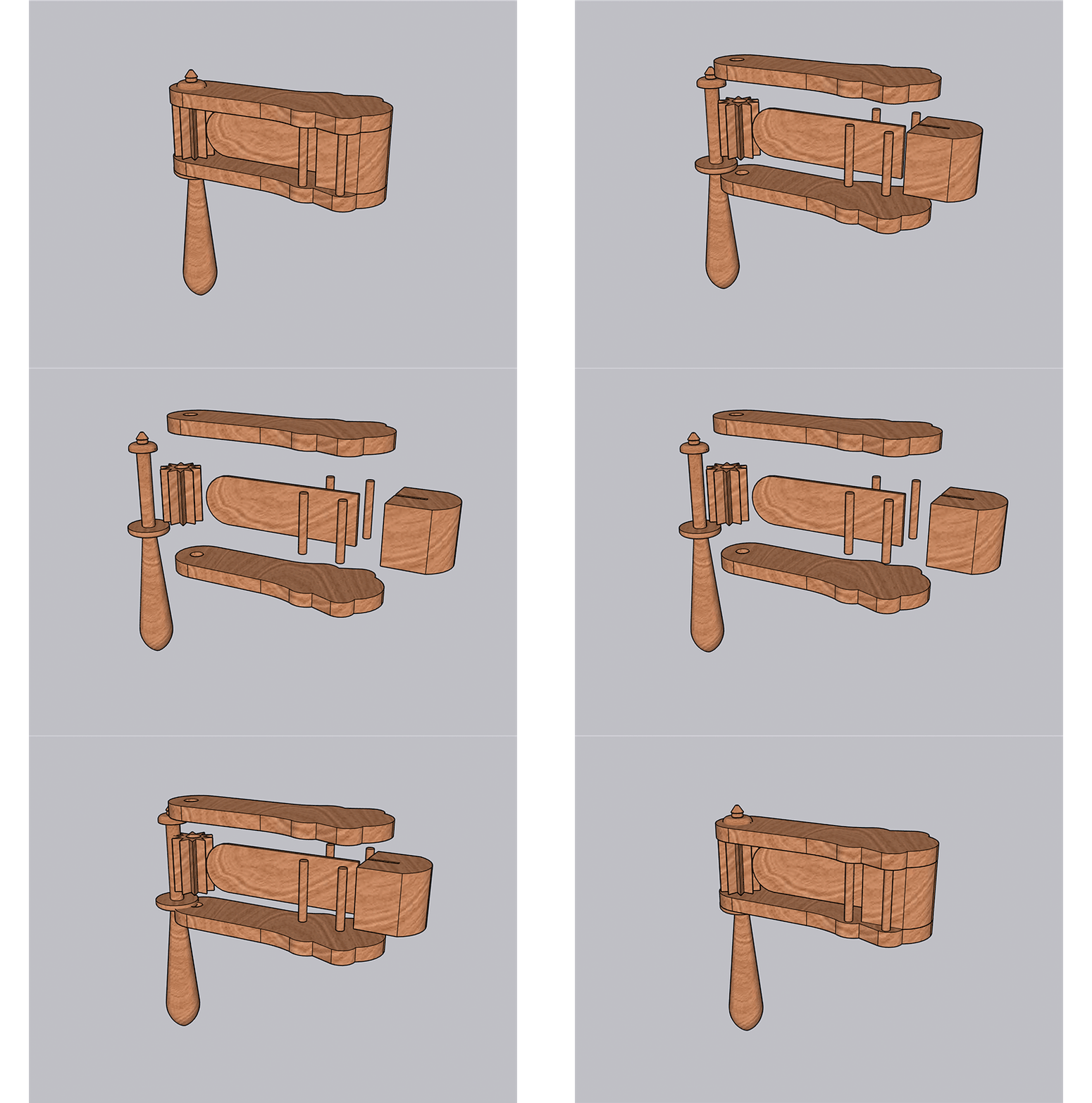
Each grogger is fairly similar in construction; a handle with an affixed cog or ribbed wheel, and a thin sliver of wood that works as a flap attached to a top and base that freely swing around the handle. These days many groggers are built from tin sheet and there are many examples of 19th and 20th century silver groggers, but the basic construction is the same. While tin and silver are flexible, wood needs to be chosen carefully for the flap so that it doesn’t snap as it smacks across the ribs of the cog. In older examples I’ve found, oak or fruit wood are used most often. Both woods are strong enough that the flap and tips of the cog won’t snap as they meet. Contemporary makers have used mahogany for the cog to make sure it’s strong enough, while the rest of the object can be made from lighter wood like beech that can spin about the handle easily. Many new examples are simple pine, a light flexible wood that probably won’t last for centuries but works well all the same. Historically, the flap would have been riven (split rather than sawn) directly from timber, ensuring straight grain and flexibility.
Bibliography
Danielos25. “The wooden clapper (cuqlajta) of St. Mary's Parish Church at Mgarr, Malta.” Published April 2, 2013. Video, 1:54, https://www.youtube.com/watch?v=RuFYf9CNBw8
Kalman, David Zvi. “The Strange and Violent History of the Ordinary Grogger.” Forward Magazine. March 20, 2016. https://forward.com/culture/335491/the-strange-and-violent-history-of-the-ordinary-grogger/
Lewinski, Dr. Yom-Tov. Sefer Ha’Moadim (The Book of Festivals). Tel Aviv: Agudat Oneg Shabbat, 1950.
Malul, Chen. “Erasing the Name of Haman the Wicked: The Origin of the Grogger.” The Librarians. October 3, 2020. https://blog.nli.org.il/en/lbh_grogger/
Maker unknown. Handcarved Purim Grogger. 19th Century. Wood, 8 x 8 ½ in. World Auction Gallery.
Markdcatlin. “War Gas Alarms 1918 WWI US Army.” Published April 7, 2011. Video, 0:18, https://www.youtube.com/watch?v=5vYYWf1890o
O’Conner, Julie. “The Rattle Watch in Beverwyck and Nepotism – an Albany Civil Service Tradition.” Friends of Albany History. Published August 12, 2018, https://friendsofalbanyhistory.wordpress.com/2018/08/12/the-rattle-watch-in-beverwyck-and-nepotism-an-albany-civil-service-tradition/
“Purim Holiday Traditions, History, & Celebrations.” Moment Magazine. Accessed November 3, 2026. https://momentmag.com/jewish-holidays/purim/groggers/?srsltid=AYCX9vIGnfoMAXSDfqRIQBAKhBr5we0_7RFoo5gbYejkPXur4CYN_7u0
Weigel, Christoph. Steindebuch. 1698, https://commons.wikimedia.org/wiki/Category:St%C3%A4ndebuch_(Christoph_Weigel_d._%C3%84.)
“What is Purim?” Chabad.org. Accessed November 3, 2026. https://www.chabad.org/holidays/purim/article_cdo/aid/645309/jewish/What-Is-Purim.htm